Travel Readiness · 2026-10-01
Why You Need a Travel Readiness Plan Before You Go

1. When your phone disappears, your backup can disappear too
You arrive after a late flight, reach for your phone outside the terminal, and discover it is gone. Your hotel address, insurance documents, bank apps, and family contacts were all on it. You borrow another phone, but your email login requires a code sent to the missing device. The airport information desk is closing. You know you need help; you do not know which problem to solve first.
Nothing about this situation requires an extraordinary disaster. A single theft can interrupt navigation, payment, identity verification, and communication at once. Add an unfamiliar language or a companion who needs medication, and an inconvenience becomes a more demanding coordination problem.
A travel readiness plan exists for that gap between something going wrong and reliable help becoming available. It is not a promise that travel will be trouble-free. It is a way to make essential information usable when your usual tools—and your ability to think clearly—are compromised.
The right time to organize that information is before departure, not outside an unfamiliar airport at midnight. Readiness means more than knowing that assistance exists. It means understanding its limits and having an accessible way to connect the pieces.
2. Why ordinary travel preparation is not enough
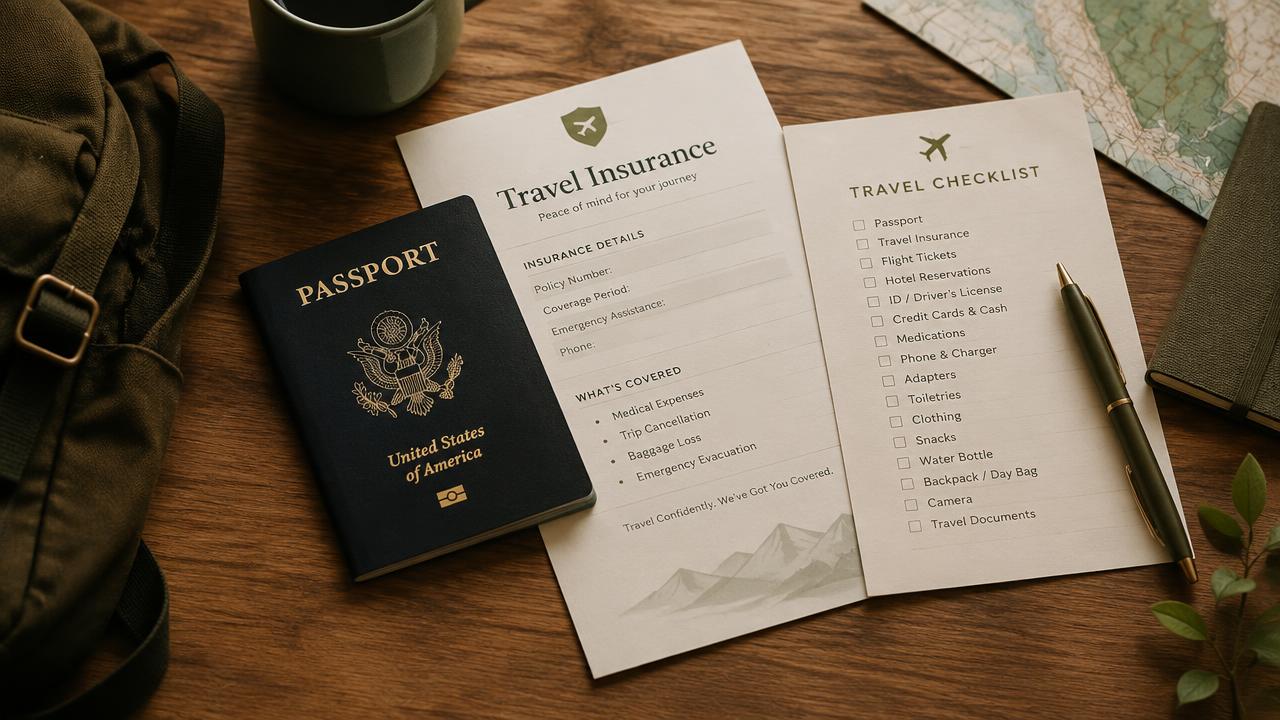
Most travelers prepare for the trip they expect to take. They save reservations, download a map, photograph a passport, and purchase insurance. These are useful steps, but they do not necessarily create a workable emergency system. A folder full of documents still leaves you responsible for finding, interpreting, and sequencing everything under pressure.
Phones also create a concentration of risk. A dead battery can remove access to several backups simultaneously. Theft can take both the device and the account recovery channel. Roaming restrictions, congested networks, or throttled data can make cloud files difficult to retrieve. Screenshots help with connectivity problems, but not when the screen itself is unavailable.
Medical situations expose a different weakness. A locked phone may be inaccessible to a first responder or hospital employee. Even if someone finds your documents, they may not know which information is current, who should be contacted, or whether a contact speaks the local language. A travel companion may be just as unfamiliar with the arrangements as you are.
Paper is not indestructible, and it should not be your only safeguard. Its advantage is independence from batteries, logins, and mobile coverage. A readable printed plan, supported by sensible digital access, reduces reliance on any single device. A pocket carry card makes selected essential information easier to find without requiring someone to search your luggage or unlock your accounts.
3. Four blind spots that can delay useful help
An embassy is not an emergency insurer
Travelers sometimes assume their government will pay a hospital bill, arrange immediate evacuation, or resolve a local legal problem. Consular assistance generally does not work that way. Officials may provide information, help with certain replacement documents, or assist with contacting others, but their authority and available services are limited. Consult your government's official consular guidance for the destination and your nationality (verify before travel).
Insurance assistance is not local emergency dispatch
An insurer's assistance team can have an important coordination role, but calling it is not the same as reaching local emergency services. Coverage, authorization requirements, payment arrangements, and evacuation provisions depend on the policy (verify before travel). Treating an insurance number as a universal first call can create confusion when immediate local intervention is needed.
A home contact does not automatically have authority
Naming someone as your emergency contact does not necessarily allow them to obtain medical information, make treatment decisions, access accounts, or authorize expenses. Those questions depend on applicable law, provider practices, and prior arrangements (verify before travel). Where formal authority matters, seek guidance from an appropriately qualified professional rather than assuming a name in your phone is enough.
Emergency access varies within and between destinations
Do not assume the number, language support, or response model you know at home applies everywhere. Regional dispatch arrangements and access to suitable care may differ, particularly outside major population centers (verify before travel). A nearby clinic is not automatically equipped for a serious emergency. Your plan needs trip-specific contacts and facility information, not a generic list copied from an old travel discussion.
These gaps are linked. You can have insurance, a helpful relative, and a nearby medical facility yet still lack a clear route between them. A readiness plan organizes those relationships before someone must navigate them under stress.
4. Understand the system before you need to use it
Emergency readiness starts with understanding roles. Local emergency services address urgent threats within their operating capabilities. Healthcare professionals assess and treat patients. Insurers handle assistance and coverage within policy terms. Consular staff provide defined government services. A trusted home contact supports communication but does not replace any of those functions.
In healthcare, triage generally prioritizes patients according to clinical urgency rather than arrival order. Processes, available specialties, interpreter access, and administrative requirements vary by facility and jurisdiction (verify before travel). A readiness plan supports orientation and communication; it does not determine clinical priority, guarantee admission, or substitute for medical judgment.
Three principles help put the moving parts in perspective:
- Separate urgent response from administration. Local help, insurance coordination, and family updates serve different purposes.
- Reduce dependence on one person or device. Essential information should remain understandable if you cannot explain it yourself.
- Define communication ownership. People supporting you should understand who coordinates updates rather than starting competing conversations.
Government travel registration can add another layer. Eligible U.S. travelers can consider the Smart Traveler Enrollment Program, or STEP; other nationalities should consult their government's official travel advisory and registration services. Eligibility, features, and destination availability must be checked with the relevant authority (verify before travel). Registration does not guarantee rescue or replace a personal emergency plan.
The practical details—destination contacts, relevant local-language prompts, and the escalation order for your trip—belong in a personalized plan. They should not be improvised from broad advice while an emergency is unfolding.
5. Why do-it-yourself readiness becomes a research project
Building your own plan sounds straightforward until you try to verify every connection. Which emergency service covers the places you will actually visit? Which facilities have relevant capabilities? Does a contact number serve travelers, administrative inquiries, or an after-hours assistance desk? Is the information official, current, and applicable to your circumstances?
A thorough do-it-yourself effort can become a 10+ hour research project per destination, especially when an itinerary includes multiple regions or travelers with different needs. That is a planning burden, not a universal measured average. The work extends beyond searching: sources must be compared, contradictions resolved, information organized, and arrangements revisited as departure approaches.
Search results are not verification. An old tourism page may remain prominent long after its details change. A recommendation in a forum may describe good routine care without saying anything about emergency capabilities. A phone number can look credible while connecting to the wrong department. Contact details, facility services, access conditions, and operating hours all need confirmation (verify before travel).
Presentation is another task. Notes that make sense to you at home may be difficult for a frightened companion to interpret. Abbreviations can be ambiguous. A long document can bury the one detail someone needs. If you are incapacitated, your memory cannot supply the missing context.
DIY preparation is possible, but it requires sustained research, careful judgment, and usable formatting—not simply collecting links. For many travelers, that effort is impractical alongside the rest of departure planning. An incomplete document can feel reassuring without addressing the situations it was intended to cover.
Prefer a structured plan to another weekend of scattered research? Explore what Ready To Go Global includes and compare the work of assembling it yourself with a personalized plan from a one-time $27, delivered in minutes.
6. A personalized plan that works beyond your screen
Ready To Go Global brings the essential planning components into a personalized, printable, offline emergency plan for your trip. The purpose is not to replace emergency services, insurance, or professional advice. It is to make relevant information and responsibilities easier to locate when normal routines stop working.
Your plan includes destination-specific emergency contacts, vetted facility information, emergency walkthroughs, check-in protocols, calendar reminders, and a printed pocket carry card. Trip-specific details are compiled for your itinerary rather than presented as a generic directory. Facility capabilities, contact details, and access arrangements can change and require a final review (verify before travel).
The walkthroughs address the organizational gap that a stack of policy documents leaves behind. Check-in protocols establish shared expectations instead of relying on a vague promise to message home. Calendar reminders help bring preparation back into view before departure, when there is still time to address omissions.
The carry card has a distinct role: it can speak for you when you cannot by presenting selected essential information in a compact, accessible format. It does not grant legal authority or guarantee that a responder will find it. It does reduce reliance on someone gaining access to your phone and interpreting your private notes.
A solo traveler may need particular attention to who notices a missed check-in. A family may need clearer coordination when one adult is occupied with a child. A business traveler may have both personal and employer communication responsibilities. The plan should reflect those differences without becoming too cumbersome to use.
Make offline readiness part of the trip, not an unfinished task. Review plans starting at $27 or learn about preparation for solo travelers and families. Delivery in minutes gives you time to review your plan before you leave.
7. Frequently asked questions
Do I need a readiness plan if I already have travel insurance?
Yes, they serve different purposes. Insurance addresses covered costs and assistance subject to policy terms. A readiness plan organizes information, communication, and emergency preparation. Review your policy's exclusions and assistance requirements directly with your insurer (verify before travel); a plan does not expand coverage.
Is a printed plan necessary for a short trip?
A short trip can still involve a stolen phone, sudden illness, or transport disruption. Duration alone does not determine how difficult an emergency would be to manage. Offline information is particularly useful when your bookings, contacts, and account access otherwise depend on a single device.
Can I just share my itinerary with someone at home?
Sharing an itinerary is useful, but it does not explain what an unexpected silence means or how communication should be coordinated. A readiness plan adds structure through check-in protocols and emergency guidance. It also makes relevant information available with you, not only to someone several time zones away.
Does a personalized plan guarantee help or remove the need to review details?
No. Response times, care availability, and access depend on local conditions. Personal circumstances and destination information can change. Review your plan for accuracy and consult official sources for current requirements (verify before travel). See the frequently asked questions or contact Ready To Go Global for product questions.
8. Next steps: build your plan before departure
Your reservations describe where you intend to go. A travel readiness plan addresses what happens when the trip stops following that itinerary. The difference matters most when your phone is unavailable, your companion is overwhelmed, or you cannot explain what you need.
You do not need to anticipate every possible emergency. You need accessible information, clear responsibilities, and less dependence on memory or connectivity. A personalized printed plan provides a practical foundation while leaving medical, legal, and emergency decisions with the appropriate professionals.
Build your Ready To Go Global plan before you go. Visit pricing for a one-time plan from $27, delivered in minutes, and review what you get. Leave time to review, print, and make your plan accessible before departure.
Sources and official resources
- U.S. Department of State — International Travel and Travel Advisories
- U.S. Department of State — Smart Traveler Enrollment Program (STEP)
- U.S. Department of State — Emergencies abroad and what consular officers can and cannot do
- U.S. Department of State — Insurance coverage overseas
- Centers for Disease Control and Prevention — Travelers' Health and Pack Smart
Get a plan built for your trip.
See plans