Traveler Profiles · 2026-10-16
Traveling With Aging Parents: What Families Should Prepare Before Departure
When the parent who knows everything cannot answer
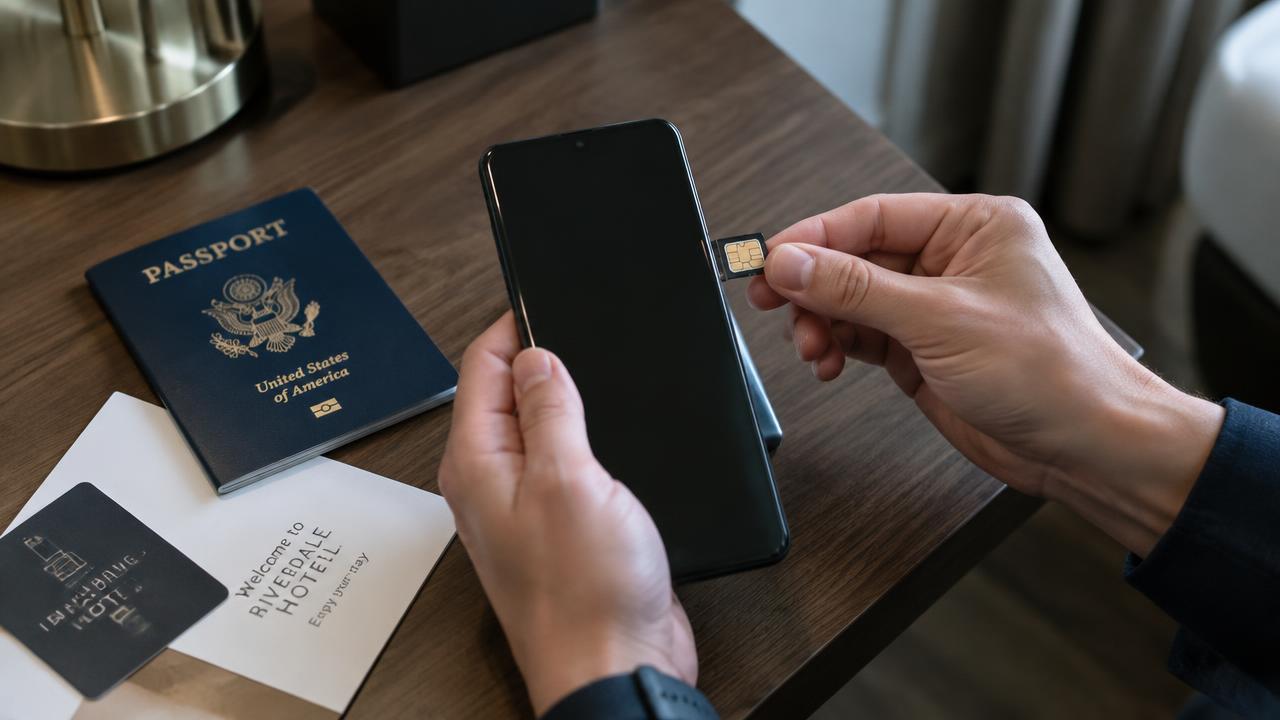
Your mother becomes confused in a hotel lobby overseas. Your father knows she takes several prescriptions, but not their names. You have the insurance documents on your phone—along with the hotel address, booking confirmations and messages from her doctor. Then you discover your bag is missing.
At the emergency department, staff ask about medications, allergies and medical history. Your mother cannot give a reliable account. Your father is frightened and struggling to hear. Your sibling at home has fragments of information, but your replacement device cannot access the family account without a verification code sent to the stolen phone.
This is not a reason to stop traveling with aging parents. It is a reason to distinguish a pleasant itinerary from a usable emergency plan. The problem is not simply whether someone knows what to do. It is whether essential information remains available when the person, device or connection everyone depends on is unavailable.
Preparation should preserve your parents’ independence while making it easier for others to help. That starts with discussing their preferences, agreeing on responsibilities and putting critical information somewhere more resilient than one person’s phone.
Why ordinary family travel preparation falls short
Most families prepare around the expected journey: accessible rooms, manageable flight connections, extra medication and comfortable transport. These arrangements matter. But they do not necessarily answer the questions that arise when a parent is hospitalized, a companion becomes ill or the family gets separated during a transit shutdown.
Digital preparation has common dependencies. Screenshots disappear with a stolen device. Cloud documents require credentials and connectivity. A phone can run out of power during a long hospital wait, and an overloaded or throttled network can make even a simple download unreliable. First responders may be unable to unlock a device, and a medical ID feature is not a substitute for a complete, accessible handover.
Travel can also magnify ordinary communication difficulties. Hearing aids may be charging elsewhere. Glasses may remain in the hotel. A parent who speaks confidently at home may struggle with unfamiliar accents, clinical vocabulary or a second language under stress.
The practical objective is redundancy, not abandoning technology. Digital records are useful, but a concise printed plan provides another route to essential information. It should be readable by someone who did not organize the trip—not just by the adult child who remembers which folder contains everything.

Four blind spots families often discover too late
1. Insurance assistance is not local emergency dispatch
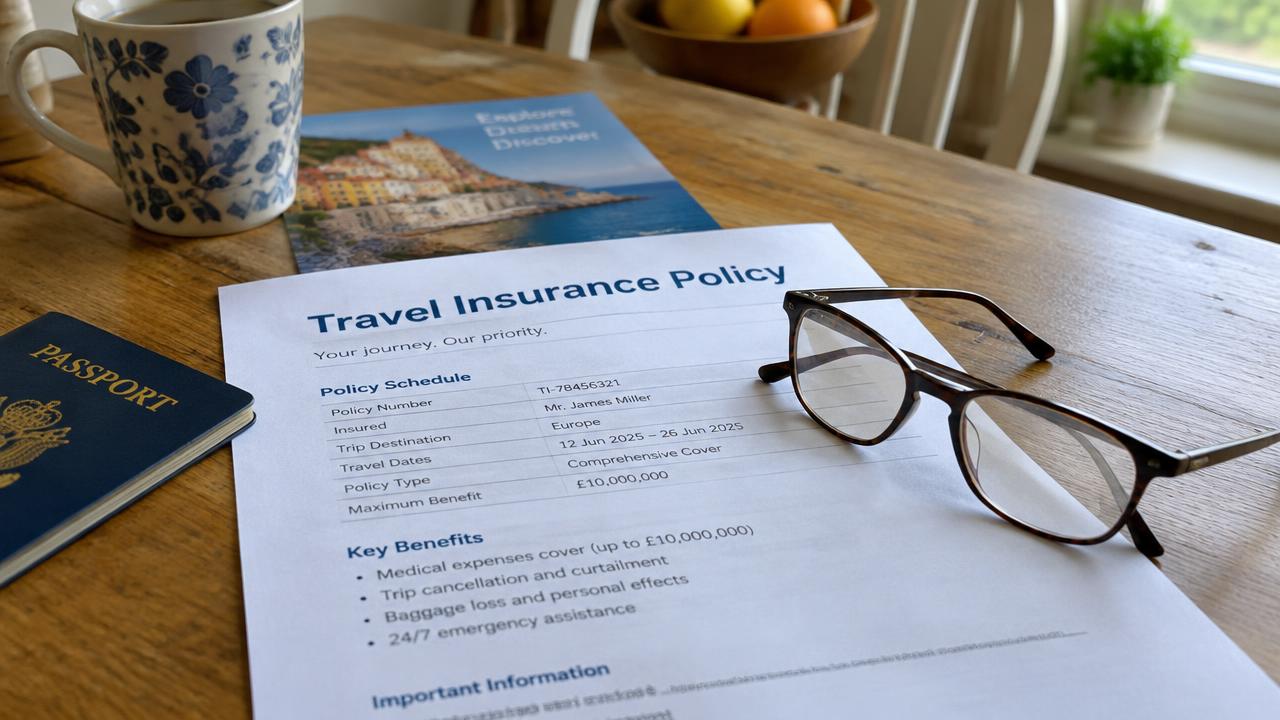
A travel insurer’s assistance service may help coordinate care, explain coverage or discuss transport. It is not a replacement for local emergency services when urgent help is needed. Authorization requirements, exclusions, payment arrangements and assistance capabilities depend on the policy (verify before travel). A policy number alone does not tell a frightened companion which organization to approach first.
Emergency access also varies by destination and sometimes by region or service (verify before travel). Familiar numbers from home should not be assumed to work everywhere. The correct destination-specific contacts and their roles belong in your family’s personalized plan, rather than in an unverified collection of search results.
2. An embassy does not function as a medical insurer
Consular staff may offer information about local resources and help communicate with relatives, subject to nationality and circumstances. They generally do not pay a traveler’s medical bills or replace local medical care. Available services and limitations must be checked with your government’s official consular guidance (verify before travel). Expecting an embassy to solve a payment dispute can delay more useful conversations.
3. Being next of kin does not settle every authority question
An adult child may be the obvious family spokesperson without automatically having authority to access records or make decisions abroad. Consent, privacy rules and recognition of legal documents vary by jurisdiction (verify before travel). Discuss relevant arrangements with qualified advisers before departure. An emergency plan can identify contacts and document locations; it does not create legal authority.
4. The usual caregiver may become unavailable too
Families often build the entire trip around one capable person. That person carries the documents, understands the medication routine and handles every booking. If they are injured or separated from the group, the remaining travelers may not know where to begin. A parent’s support needs can become harder to meet even when that parent is not the person receiving treatment.
The principles that make family emergency readiness useful
A workable plan separates urgent medical needs, practical coordination and family communication. These responsibilities overlap, but they are not interchangeable. Hospital triage generally prioritizes clinical urgency rather than arrival order, travel status or insurance arrangements. Local procedures, language support and payment practices vary (verify before travel). Official health authorities and the treating facility are the authoritative sources for local processes.
Before departure, discuss travel suitability and relevant health information with your parents’ clinicians. Medication restrictions, documentation requirements and availability abroad must be checked through appropriate official sources and qualified professionals (verify before travel). This is individualized preparation, not something a general travel article can resolve.
- Make essential information accessible: agree with your parents what relevant information can be shared and who should be able to find it.
- Assign communication responsibilities: distinguish the person coordinating locally from the person updating relatives at home, with a backup for each.
- Prepare for interrupted access: assume that a device, account or primary caregiver may temporarily be unavailable.
Government travel registration can provide another communication channel. Eligible U.S. travelers can consider the Smart Traveler Enrollment Program, or STEP; other travelers should consult their own government’s services. Eligibility, coverage and available alerts should be checked through official government sources (verify before travel). Registration does not guarantee assistance, evacuation or rescue.
These principles need to become trip-specific decisions. Who remains with the parent receiving care? Who supports the other parent? Who contacts the insurer and updates the family? Your plan should make those responsibilities intelligible without requiring a debate in a hospital corridor.
Why building the plan yourself becomes a larger project
Do-it-yourself readiness is possible, but thorough preparation can become a 10-plus-hour research project per destination, especially when a family must reconcile medical, accessibility, insurance and communication requirements. The difficulty is not finding information. It is establishing whether that information is current, authoritative and relevant to your exact route.
A highly rated clinic may not have the capabilities required for an emergency. A hospital website may describe services without explaining practical access. A search result may display an old telephone number. A discussion forum may confidently describe an insurer’s process that does not apply to your policy. Facility capabilities, contact details and access arrangements all require confirmation (verify before travel).
Then comes the editing. A long document can be technically comprehensive yet unusable under stress. Family shorthand may mean nothing to medical staff. A medication photograph may be blurry, outdated or missing context. Several versions circulating in a group chat can create uncertainty about which one is correct.
Printed information also requires judgment. Too little leaves gaps; too much exposes unnecessary sensitive information and hides urgent details. Your parents should participate in deciding what is shared, rather than being treated as passengers whose personal information everyone else controls.
For many families, the sensible comparison is a potential 10-plus hours of research, verification and formatting against a personalized plan from $27, delivered in minutes. Neither approach eliminates the need to confirm changing details, but a structured service reduces the burden of assembling everything from scratch.
Before investing another evening in scattered bookmarks, see what a Ready To Go Global plan includes. Compare a coherent offline resource with the collection of notes your family would otherwise have to interpret during an emergency.
A personalized plan built around your parents’ actual trip
Ready To Go Global creates personalized, printable, offline emergency plans and a pocket carry card. The purpose is to organize the information and responsibilities that families otherwise leave distributed across phones, email accounts and one person’s memory.
Your plan brings together destination-specific emergency contacts, vetted facilities, emergency walkthroughs, check-in protocols and calendar reminders. Trip-specific details are compiled for your itinerary rather than presented as a generic directory. Contacts, facility capabilities and operating arrangements can change and remain subject to confirmation (verify before travel). Vetting is not a promise of availability, admission or a particular medical outcome.
For a family traveling with aging parents, the value is in the connections between those elements. A facility reference is more useful when the family understands its role. A check-in protocol is more useful when someone has accepted responsibility for responding. A reminder is more useful when it prompts review before departure rather than after the family has boarded.
The printed carry card can speak for your parent when they cannot, by presenting essential information and contacts in an accessible form. It cannot grant decision-making authority, replace clinical records or guarantee that someone will find or read it. It does provide a physical reference that does not require a charged battery or an account login.
The plan supports preparation; it does not replace emergency services, travel insurance, medical advice or legal advice. Families still need accurate inputs and discussions with their parents. Explore readiness for senior travelers or family travel planning for the relevant context.
Give every responsible adult a common reference before departure. Review plans starting at a one-time $27 fee, delivered in minutes, instead of relying on one family member to remember and explain everything.
Frequently asked questions
Do we need a plan if a parent is healthy and independent?
Health and independence do not remove travel disruptions. A stolen phone, lost documents or an injured companion can create problems without any change in a parent’s underlying health. Keep preparation proportionate to the trip and involve your parents in the decisions. Readiness should support autonomy, not assume incapacity.
Is travel insurance enough?
Insurance addresses covered financial risks and may include assistance services. It does not automatically provide an accessible family communication structure or ensure that relevant information is available during an emergency. Benefits, exclusions, pre-existing-condition provisions and notification requirements are policy-specific (verify before travel). Confirm them directly with the insurer.
Should the adult child carry all the information?
Depending entirely on one person creates a single point of failure. Agree on appropriate access and privacy boundaries with your parents, then ensure designated companions understand the plan. Avoid circulating more sensitive information than necessary. The goal is useful redundancy, not unrestricted distribution of personal records.
Can we use the same plan for every destination?
Some family information may remain relevant, but emergency contacts, facilities, transport conditions and consular arrangements change with the itinerary (verify before travel). A previous trip’s paperwork is not automatically suitable for the next one. For service questions, visit the FAQ or contact Ready To Go Global.

Next steps: prepare while everyone can participate
The best time to agree on emergency responsibilities is when your parents are comfortable, informed and able to express their preferences. Waiting until departure makes those conversations rushed; waiting until an incident makes them harder.
You do not need to imagine every possible disaster. You do need a usable reference for moments when the itinerary stops working and someone else must help. Phones, screenshots and bookmarks remain useful tools, but none should be the only route to essential information.
Build your family’s Ready To Go Global plan before departure. See the plan contents, then choose a personalized plan from $27. Delivered in minutes, it gives your family a printable, offline foundation to review together before the journey begins.
Get a plan built for your trip.
See plans