Travel Risks · 2026-10-16
Traveling Beyond Cell Service: Emergency Readiness When Your Phone Cannot Help

1. When the road disappears from your screen
You are driving through a remote coastal region when your companion becomes seriously unwell. The last village is behind you. Your phone has no signal, and the accommodation address is buried in a booking app that will not load. You downloaded a map, but the nearest medical symbol tells you nothing about opening hours or emergency capabilities.
A passing driver stops. You cannot clearly explain the symptoms in the local language. Your companion normally handles the travel arrangements, insurance details and family contacts. Now they cannot answer questions, and their phone is locked.
Nothing about this situation requires an extreme expedition. Mountain roads, islands, rural rail routes and national parks can all put ordinary travellers beyond reliable connectivity. Even near a city, network congestion, a power failure or a damaged phone can create the same information gap.
The central problem is not simply making a call. It is knowing what help is appropriate, communicating your location and essential information, and letting someone else continue the process if you cannot. Offline readiness means your emergency arrangements remain understandable when the person, device or network you depend on becomes unavailable.
2. Why ordinary travel preparation stops working
Most travel preparation assumes your phone will remain a working gateway to everything else. Tickets live in an app. Insurance documents sit in email. Emergency contacts are saved behind a passcode. The itinerary is a link someone at home may never have opened.
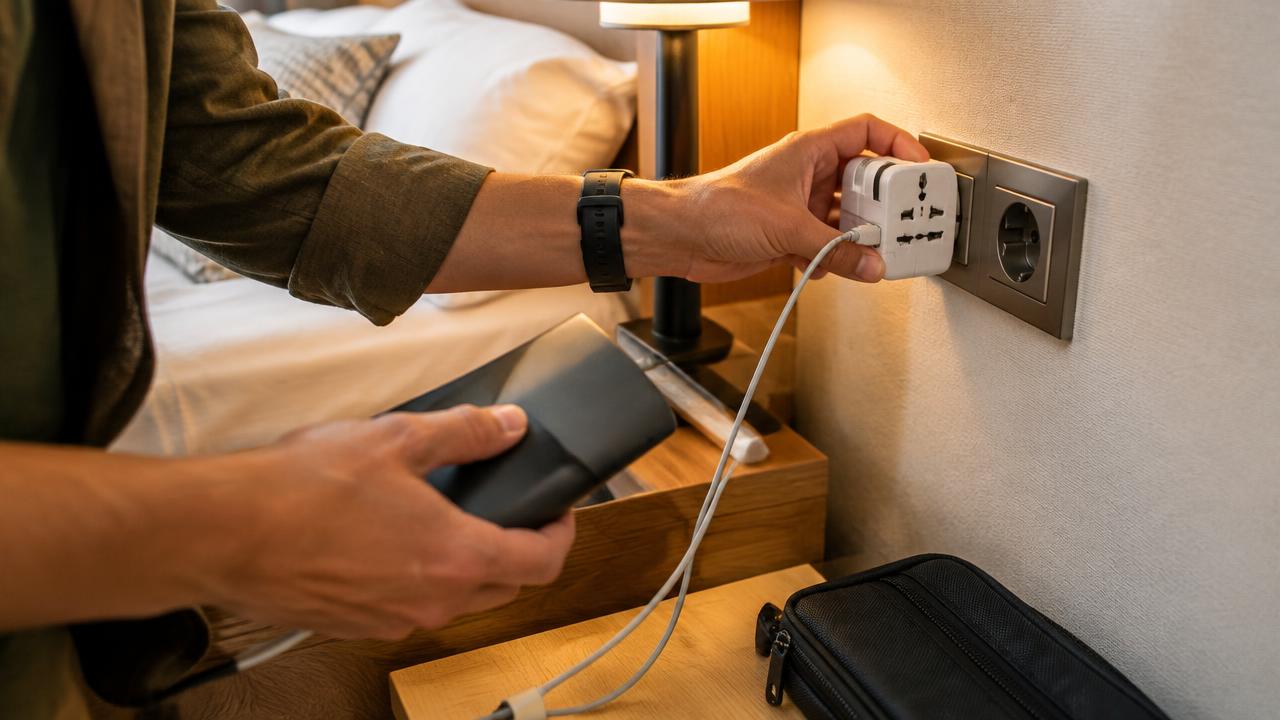
Those arrangements are convenient, but they share a failure point. A depleted battery, theft or water damage can remove them together. A throttled connection may allow a short message while failing to load a policy document. Public Wi-Fi may require authentication through a phone number you can no longer access.
Downloaded maps are useful, but they are not an emergency response system. A location pin does not establish whether a facility can manage a serious injury, whether it is accessible from your route, or whether the information is current. Facility capabilities and access conditions need authoritative confirmation (verify before travel).
Nor should you assume that first responders can open your device. Some phones offer lock-screen emergency information, but access and configuration vary. Even accessible information may be incomplete or written in a language the person helping you cannot read.
Paper is not a replacement for communication equipment or professional help. Its value is different: it preserves essential information without requiring power, reception, a password or your ability to explain it. A readable printed plan provides continuity where screenshots and bookmarks may not.
3. Four blind spots that matter beyond coverage
A signal indicator is not a rescue capability
A phone may sometimes reach emergency services through another available network, but that does not mean a call is possible where no compatible network exists. Satellite features also depend on the device, region, service availability and operating conditions (verify before travel). Check manufacturer documentation and official destination guidance rather than assuming an emergency button works everywhere.
Regional dispatch arrangements can differ, and a familiar number from home may not be the right route to local assistance. The relevant contacts and their purposes belong in your destination-specific plan, not in a collection of remembered numbers.
Insurance assistance is not local emergency dispatch
An insurer's assistance team may help coordinate care or discuss coverage, but contacting it is not necessarily how immediate local help is dispatched. Coverage, authorization requirements and evacuation arrangements depend on your policy and circumstances (verify before travel). A policy number alone does not explain who has responsibility for the next decision.
A consulate is not a medical payment service
Consular officers may provide information, help communicate with relatives or explain available services. They generally do not pay private medical bills or replace local emergency responders. Assistance varies by nationality and destination; your government's official consular guidance is the authoritative source (verify before travel).
A worried relative does not automatically have authority
Your home contact may know your itinerary but still lack access to relevant records or permission to make decisions. Being named as an emergency contact does not necessarily confer legal authority. Applicable arrangements should be discussed with qualified professionals where needed (verify before travel). Operationally, your contact also needs to understand what a missed check-in means when silence is expected.
4. The principles of an offline emergency plan
Effective readiness separates immediate assistance, medical coordination and communication with people at home. These roles can overlap, but they are not interchangeable. A local responder, an insurance assistance team and a relative each need different information and have different capabilities.
In a medical emergency, triage generally prioritizes urgency and clinical need rather than travel convenience. The most appropriate destination is not always the closest map listing or the facility your accommodation recommends. Local emergency professionals should guide urgent care decisions. Payment and insurance processes vary by health system and facility (verify before travel).
Government travel registration can provide another layer of support. Eligible US travellers can consider the Smart Traveler Enrollment Program, or STEP; other nationalities should consult their government's available services. Registration may support advisories and consular communication, but it is not live tracking, guaranteed rescue or a substitute for local help. Eligibility and service scope should be checked through official sources (verify before travel).
Three principles help distinguish a useful plan from a folder of documents:
- Independent access: essential information remains available without your main phone or account.
- Clear ownership: companions and home contacts understand their communication roles.
- Destination relevance: arrangements reflect your actual route, activities and foreseeable coverage gaps.
Beyond those principles, the detail matters: contact roles, escalation order, local-language prompts and emergency walkthroughs must fit the trip. Ready To Go Global compiles that trip-specific information into a personalized offline plan rather than leaving you to assemble disconnected sources.
Make offline readiness part of booking, not a last-minute download. Explore what your personalized plan includes, including the printable information that helps a companion or responder understand your arrangements when you cannot explain them.
5. Why do-it-yourself readiness becomes a second project
Building a credible emergency plan is not the same as searching for an emergency number. It involves distinguishing dispatch from advice lines, checking medical capabilities, understanding access limitations, reviewing insurance requirements and making the resulting information usable under stress.
A thorough attempt can consume 10+ hours of research per destination, particularly when a route crosses regions or includes remote activities. That is a planning burden, not a universal time estimate. Much of the work goes into resolving uncertainty: two sources disagree, a listing has no update date, or a facility's name appears differently across languages.
Search results also create false confidence. A prominently listed clinic may not provide emergency care. A travel forum may describe arrangements that have changed. An official page can be authoritative yet difficult to interpret without knowing which jurisdiction covers your route. Time spent researching does not automatically make the final notes reliable.
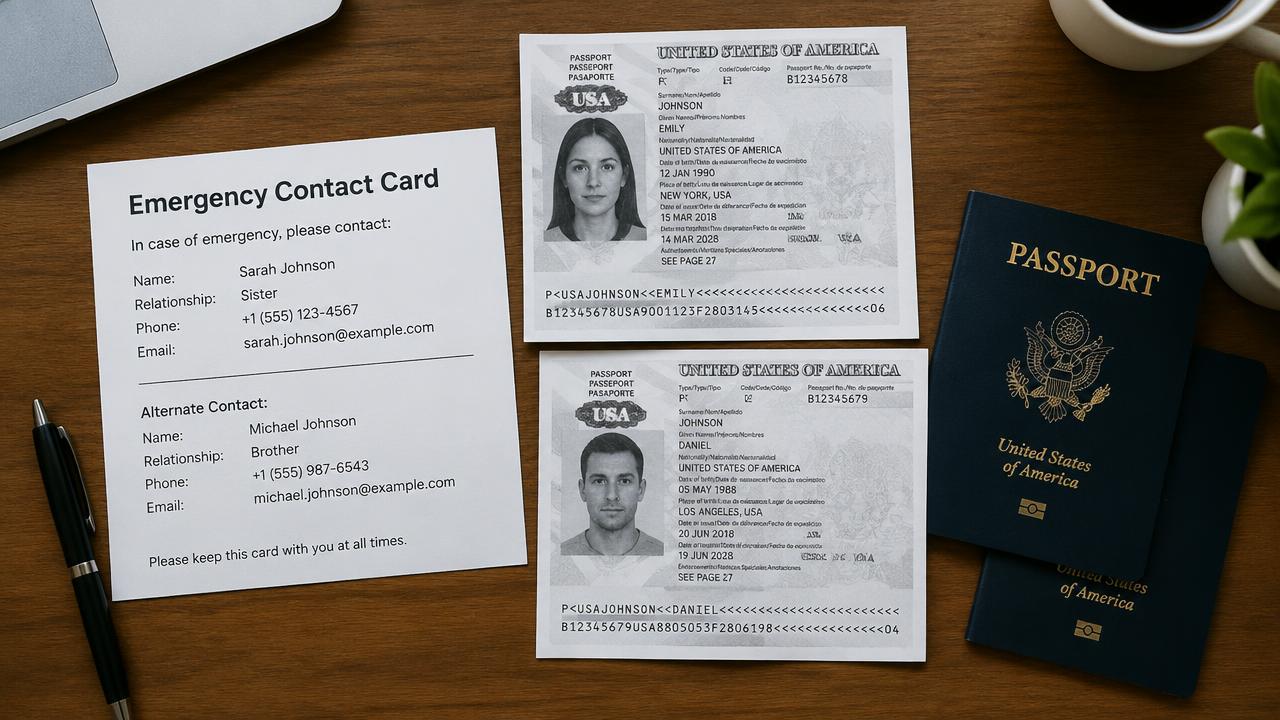
Then there is the presentation problem. A document written for your own memory may be hard for anyone else to use. Abbreviations, scattered screenshots and unexplained contacts force a helper to reconstruct your thinking. When you are incapacitated, you cannot tell them which note is current.
Connectivity gaps add another layer: expected silence must be distinguished from an overdue check-in. Without an agreed communication structure, relatives may either become alarmed unnecessarily or wait because they assume you are simply out of range.
For some travellers, careful DIY work is possible. The question is whether you have the time and expertise to verify, organize and maintain it. A one-time plan from $27, delivered in minutes, offers a practical alternative to turning emergency readiness into a separate research project.
6. A personalized plan that does not depend on reception
Ready To Go Global creates personalized, printable, offline emergency plans designed around the information people need when ordinary travel systems stop working. The aim is not to promise rescue or remove uncertainty. It is to make essential arrangements available and understandable without relying on a live connection.
Your plan brings together destination-specific emergency contacts, vetted facilities, emergency walkthroughs, check-in protocols and calendar reminders. Trip-specific contacts, facility information and access arrangements should still be reviewed for changes (verify before travel). Vetting does not guarantee that a facility will have capacity or be appropriate in every emergency.
The printed pocket carry card provides a compact way to communicate essential information when you cannot speak for yourself. It complements the fuller plan rather than attempting to fit every contingency into a wallet-sized space. Unlike information stored only inside an account, it does not require a login to be read.
For travel beyond service, this distinction matters. The plan supports decisions and communication; it does not create coverage or replace suitable emergency communications equipment. Remote activities may require specialist guidance, a qualified operator or an appropriate satellite device, depending on the destination and activity (verify before travel).
Different trips also create different coordination problems. A solo traveller cannot assume a companion will notice an emergency. A family may need information accessible to more than one responsible adult. Personalization makes those differences part of readiness rather than an afterthought.
Choose a usable plan over another folder of unfinished research. Review plans starting at a one-time fee of $27, delivered in minutes, and put your emergency information into a form that can travel independently of your phone.

7. Frequently asked questions
Are downloaded maps and screenshots enough?
They are useful supporting tools, but they depend on an accessible, functioning device and may omit important context. A screenshot does not establish whether a contact is appropriate or what another person should do with the information. A printed plan addresses that coordination gap while maps continue to support navigation.
Should I carry a satellite communicator?
That depends on your route, activity and available alternatives. Consult official destination guidance and reputable activity providers. Device coverage, subscription requirements, local restrictions and emergency-service arrangements vary (verify before travel). A communicator can help transmit a request; a plan supports the information and coordination around it. Neither substitutes for the other.
Can my home contact simply track my location?
Location sharing can stop updating when connectivity or power disappears. A last-known position may be useful, but it does not prove your present location or explain your condition. Home contacts need an agreed understanding of expected coverage gaps and check-in responsibilities, not just access to a moving dot.
Does a printed plan replace travel insurance?
No. A plan organizes readiness; insurance addresses covered financial risks and assistance under its terms. Review policy exclusions, activities and remote-area provisions directly with your insurer (verify before travel). For questions about the Ready To Go Global product, visit the frequently asked questions page.
8. Next steps: prepare before the signal ends
Travelling beyond cell service does not have to mean travelling without a workable information system. The important shift is to stop treating your phone as the only place where your emergency arrangements exist.
Before departure, consider whether another person could understand your arrangements if your device were unavailable and you could not speak. If the answer depends on opening your email, guessing a password or searching an unfamiliar destination, there is still a readiness gap.
Build your Ready To Go Global plan before you leave. Get personalized, printable emergency information and a pocket carry card, with a one-time fee from $27 and delivery in minutes. See what you get and choose your plan while you still have the time and connection to prepare.
Get a plan built for your trip.
See plans