Travel Readiness · 2026-10-01
The Travel Risks Most People Don't Think About Until It's Too Late
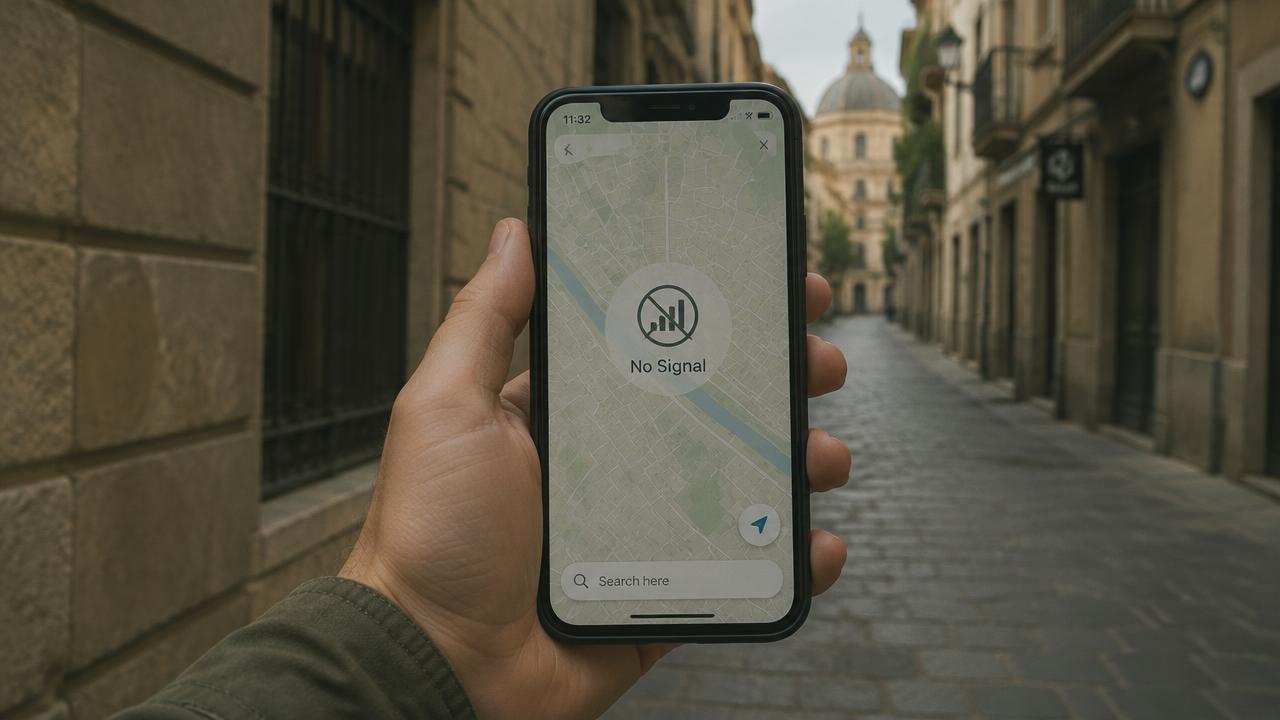
1. One stolen phone can take your whole plan with it
You arrive late in an unfamiliar city. Somewhere between the station and your hotel, your phone disappears. Your accommodation address, insurance documents, banking app, and return ticket were all on it. You borrow a device to sign in to your email, but the account requests a verification code sent to the missing phone.
Then you discover your wallet is missing too. Your partner at home knows which country you are visiting, but not tonight’s hotel. The station information desk is closing. You are not injured, yet several ordinary problems have combined into an emergency: no reliable communication, limited access to money, and no easy way to retrieve the information you need.
Now imagine the same information problem after a collision, when you cannot answer questions. A locked phone may contain your medical details and emergency contacts, but that does not mean someone treating you can find them. The difference is not how carefully you booked your holiday. It is whether your preparation remains usable when you lose the ability to manage it yourself.
The overlooked travel risk is dependency: too many essential functions resting on one device, one account, or one person.
2. Why ordinary travel preparation fails under pressure
Most travellers prepare for inconvenience. They save screenshots, download a map, buy insurance, and send someone their flight details. Those are useful measures. They are not, by themselves, an emergency system. Screenshots survive weak reception, but not a stolen handset. Cloud storage survives device loss, but may become inaccessible behind two-factor authentication.
Even when you still have your phone, a dead battery, damaged charging port, network congestion, or throttled data can interrupt access. During a blackout or transit shutdown, thousands of people may be seeking information at once. An app that worked perfectly at breakfast may not be dependable when plans change that evening.
There is also a usability problem. A folder labelled “Trip” might make sense to you, but not to your companion, a hotel employee, or a clinician. Phone emergency-information features vary by device and configuration, and their visibility should be tested rather than assumed (verify before travel).
Language adds another layer. Knowing what you want to ask does not ensure that you can explain an address, medication, or insurance issue clearly under stress. Translation software can help, but it brings its own device and connectivity dependencies. Offline preparation is not a rejection of technology. It is a way to avoid making technology the only route to help.

3. Four blind spots that can turn a disruption into a crisis
An embassy is not a financial safety net
Travellers sometimes assume their government will cover emergency treatment, arrange free evacuation, or resolve a dispute with local authorities. Consular assistance has limits. Embassies generally do not pay private medical bills or override local law. Available assistance depends on nationality and circumstances; consult your government’s official consular guidance (verify before travel). Knowing that boundary before departure prevents wasted time pursuing help an office cannot provide.
Insurance assistance is not local emergency dispatch
An insurer’s assistance team may help coordinate care or payment arrangements, but calling that team is not the same as reaching local emergency responders. Coverage, exclusions, authorisation requirements, and evacuation decisions depend on the policy and situation (verify before travel). The practical gap is between needing immediate local help and later establishing how that help is funded. A traveller needs to understand both systems without confusing their roles.
Your home contact may have information but no authority
Naming a sibling as your emergency contact does not automatically give them access to medical records, banking services, or decision-making authority. Privacy rules, local law, institutional procedures, and prior arrangements can affect what they can do (verify before travel). They may also be asleep, unreachable, or unaware that another person is already coordinating. Sharing an itinerary is helpful; establishing a workable communication role is different.
The right help depends on where you actually are
Emergency dispatch arrangements can differ by country, region, and service. A number remembered from home may not reach the appropriate responders abroad. Nor is the nearest clinic necessarily equipped for major trauma. Cruise ports, islands, rural areas, and adventure routes create additional access constraints (verify before travel). These are trip-specific questions, not details to leave to a hurried search. Relevant contacts and facility information are compiled for your exact trip in your personalized plan.
4. The principles that make emergency preparation usable
A useful plan separates immediate safety, clinical care, administrative support, and family communication. They are related, but they do not happen through a single organisation. In a medical emergency, local emergency services and treating clinicians determine the immediate response. Hospital triage generally prioritises clinical urgency, not arrival order or a traveller’s preferred schedule.
Payment and admission processes differ between destinations and facilities (verify before travel). Insurance support can be important, but financial questions should not be mistaken for medical triage. This is general readiness information, not individual medical advice; rely on local emergency professionals for urgent clinical decisions.
Consular services occupy another lane. They may provide information, help contact family, or assist with replacement travel documents within their remit. Government traveller registration can also support access to official alerts and communication. U.S. travellers can review STEP through the U.S. Department of State; other nationalities should consult their own government’s equivalent services and eligibility rules (verify before travel). Registration does not replace a personal emergency plan or guarantee rescue.
- Separate the roles: responders, insurers, consulates, and home contacts serve different purposes.
- Remove single points of failure: essential information should remain accessible without your usual phone or login.
- Make ownership clear: communication works better when someone knows who is coordinating and who needs updates.
Your exact escalation order, destination contacts, and local-language prompts belong in a trip-specific plan, not a generic article. See what the Ready To Go Global plan includes if your current preparation is spread across apps, messages, and memory.

5. Why do-it-yourself readiness becomes a research project
It is possible to assemble emergency information yourself. The difficulty is not finding a phone number. It is establishing whether that number is current, what the organisation actually does, when it is available, and whether it applies to your route. A search result can look authoritative while pointing to an old office, a booking service, or a facility without the capabilities you need.
Thorough DIY preparation can become a 10+ hour research project per destination once you include official guidance, insurer procedures, suitable facilities, communications contingencies, and document-access problems. That is a planning burden, not a universal time estimate. Multiple destinations and complex itineraries add more moving parts. Even after that work, collected information still needs to be reconciled and made usable.
Sources also age differently. A general consular explanation may remain useful for years, while an office location, access restriction, or facility service can change. Emergency contacts, facility capabilities, entry requirements, and policy terms all require current confirmation (verify before travel). A saved search result is evidence that you found something once, not that it remains dependable.
Then comes the editing problem. A long document can be technically complete and functionally unreadable. Under stress, people may struggle to scan dense notes, interpret abbreviations, or decide which of several contacts comes first. If you are incapacitated, your personal shorthand becomes somebody else’s puzzle.
The real comparison is not “free notes versus a paid document.” It is your time researching, checking, organising, and maintaining information versus a personalized plan designed for offline use. A one-time Ready To Go Global plan starts from $27 and is delivered in minutes. View pricing and build your plan before departure turns research into an urgent task.
6. A personalized plan puts the missing pieces together
Ready To Go Global brings emergency preparation into a personalized, printable format for your journey. The plan includes destination-specific emergency contacts, vetted facilities, emergency walkthroughs, check-in protocols, calendar reminders, and a pocket carry card. The aim is to make relevant information easier to access when normal travel tools are unavailable.
Destination specificity matters. A city break, a cruise itinerary, and a remote hiking trip do not present identical access problems. Your plan compiles contacts and facility information for the trip you are taking, rather than expecting you to adapt a generic directory. Operational details and service availability can change, so current conditions still matter (verify before travel).
The emergency walkthroughs organise situations that are difficult to reason through under pressure. Check-in protocols help define expectations between travellers and people at home. Calendar reminders bring preparation back into view before departure, when there is still time to address missing arrangements. These elements work together; a list of numbers alone cannot do all of those jobs.
The printed carry card has a distinct purpose: it can speak for you by presenting essential information when you cannot communicate. Unlike a locked phone, paper does not require a passcode or battery. It must still be carried where it can be found, and it cannot guarantee that someone will see it or act on it.
This is preparation, not an emergency response service, insurance policy, or guarantee of care. Explore the plan contents and consider what another person would need if you were unable to explain your own situation.

7. Frequently asked questions
Is travel insurance enough?
No. Insurance addresses covered risks under its policy terms; it does not make your phone accessible, tell a companion where you stored information, or replace local emergency services. Review coverage and assistance procedures with your insurer (verify before travel). A readiness plan complements insurance rather than substituting for it.
Why print anything if my documents are available offline?
Offline downloads help when connectivity fails, but they remain tied to the device holding them. Theft, damage, or a flat battery can remove that access. Printed information offers a separate access route. Paper can also be lost, so the principle is redundancy, not treating any single format as infallible.
Does this matter if I am travelling with someone?
Yes. Companions can become separated, injured together, or dependent on the same phone and accounts. One person may also hold all the booking and insurance information. Shared understanding matters as much as travelling together. Ready To Go Global provides options for family travel as well as solo travellers.
Does a plan need updating for another trip?
Trip-specific information should match the itinerary, travellers, and current arrangements. A previous destination’s contacts or care options may be irrelevant elsewhere. Material changes should prompt a review, particularly changes to route, health information, or insurance (verify before travel). Visit the FAQ for product questions.
8. Next steps: prepare before access disappears
The most useful question is simple: if your phone vanished tonight, could you and someone helping you still access the information that matters? If the answer depends on remembering a password, finding an old message, or being able to speak, your preparation has an exposed dependency.
You do not need to predict every emergency. You need a practical way to organise essential information before an emergency limits your choices. Notes and bookmarks remain useful supporting tools, but they should not carry the entire burden.
Build your Ready To Go Global plan before departure. Get a personalized, printable offline emergency plan and pocket carry card, with a one-time fee from $27 and delivery in minutes. Choose your plan and put an accessible backup alongside the travel tools you already use.
Get a plan built for your trip.
See plans